Slab Leak Water Damage in Lone Tree
A repaired underfloor pipe can leave a wet floor assembly behind. Lone Tree slab leak cleanup focuses on the water remaining around the repaired area, adjoining finishes and wall bases before those layers are closed again.
(888) 532-8620Discuss moisture beneath the floor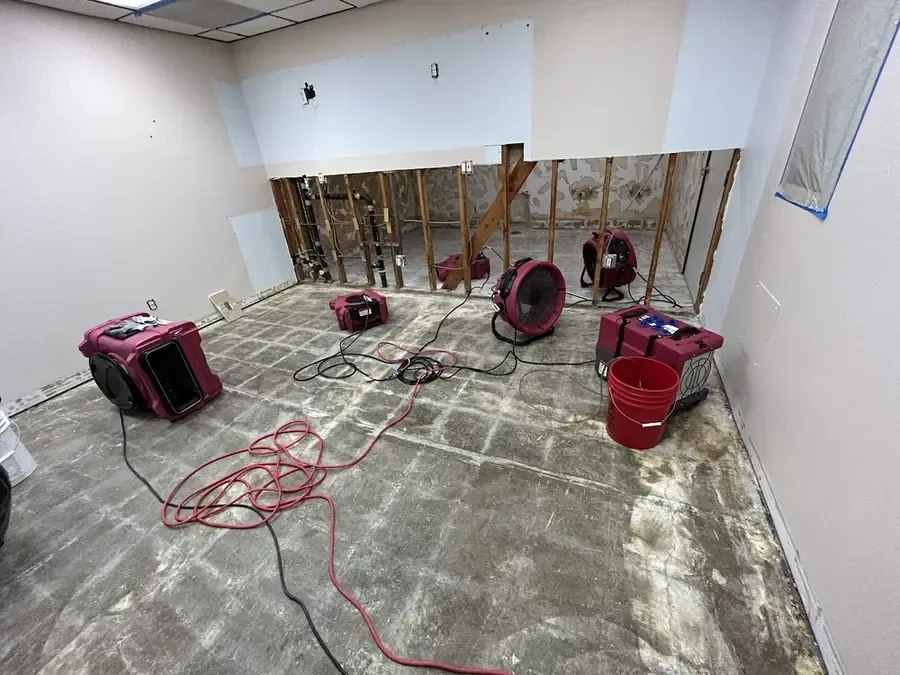
How slab leak water damage is handled
Slab leak restoration addresses the damage left by a confirmed underfloor release. Moisture measurements and accessible construction details determine which finishes need lifting and how the retained assembly can be dried.
Rapid local response
The response team prioritizes active water and asks about safe entry, continuing flow and occupied rooms. A clear description helps the assessment focus on hazards before equipment reaches the wet area.
IICRC S500 drying standard
The drying crew sets material goals against unaffected references, sizes dehumidification to the evaporation load and adjusts airflow as readings change. A dry surface alone never closes the moisture record.
Claim-ready documentation
The mitigation team records the source, affected materials, photographs and daily readings in a room-by-room scope. The insurer reviews that evidence against the policy and makes the coverage decision.
Local water experts
The technician distinguishes plumbing discharge from outside water at the actual building. Different floor assemblies, access restrictions and contents call for different drying methods, even when neighboring rooms share the same leak.
First steps for slab leak water damage
- Confirm the plumbing finding
A suspected underfloor leak needs source evaluation by the appropriate trade. The cleanup assessment can then use the confirmed repair location to plan measurements around the affected assembly.
- Keep the opening accessible
Covering the repaired area too early can conceal damp layers. The repair and restoration sequence should leave appropriate access until the surrounding moisture condition has been checked.
- Identify the installed finish
Product records or leftover flooring can help identify the visible material. The actual layers beneath it still need inspection before a removal or drying method is selected.
- Protect adjoining dry rooms
Tools, debris and wet flooring need a controlled route out. Keeping unaffected spaces clear helps contain the work and preserves room for safe equipment placement during drying.
What does slab leak water damage cost in Lone Tree, CO?
Lone Tree slab leak cleanup costs reflect the access needed after plumbing repair, the number of wet floor layers and spread into wall bases. The written estimate should distinguish restoration from pipe repair and replacement flooring.
Accessible floor edge
$1,500 to $3,000
- Exposed wet junction
- Limited covering removal
- Focused substrate measurements
Room and wall bases
$3,000 to $6,000
- Wider floor involvement
- Trim access work
- Connected wall drying
Multiple concealed areas
$6,000 to $10,000+
- Several trapped pockets
- Layered access decisions
- Extended moisture monitoring
Category, wet square footage, material class and the delay before drying change the scope. The water damage cost calculator gives an estimate only; the inspection establishes the work.
Documentation for your insurance claim
The restoration team assembles timestamped photographs, a moisture map, daily psychrometric logs and a room-by-room scope. Sudden accidental water damage, long-term leakage and outside flooding can receive different treatment. The property owner checks the policy with the insurer; documentation supports review without promising payment for mitigation, access or plumbing repair.
The slab leak water damage process
Link the repair to the moisture map
The plumbing findings establish the release location. Restoration readings then extend into adjoining finishes and wall bases, creating a map that reflects the remaining water rather than only the repair opening.
Expose the necessary material interfaces
Access is chosen around wet junctions, damaged finishes and blocked drying paths. The scope records which layers are removed and why, allowing retained flooring and wall materials to receive separate treatment.
Adjust drying to the substrate
Air movement and humidity control are arranged around accessible wet surfaces. Dense or covered materials are reassessed as work progresses, with further access considered when readings show that trapped moisture remains.
Prepare the flooring repair record
Completion notes identify drying locations, remaining construction openings and the condition of retained materials. The flooring trade can use that record alongside product requirements when planning preparation and installation of the replacement finish.
Inside the slab leak water damage assessment
A damp floor edge can be the first visible sign of water that has traveled underneath the finish. After a plumber confirms an underfloor leak, restoration needs its own assessment. The pipe repair addresses the release, while the cleanup scope addresses water held in concrete, flooring, adhesives and adjoining wall materials.
Start with the construction that is actually present
RidgeGate East includes developing neighborhoods, and RidgeGate West is close to fully developed. Neither location replaces an inspection of the affected floor. The assessor needs to identify the foundation, finish layers and repair opening before deciding where moisture can be measured or how water can escape during drying.
- A adhered floor covering can restrict access to moisture at the interface with the substrate.
- Base trim may hide a wet junction where water has reached the bottom of a wall.
- A plumbing access opening can expose one area while leaving surrounding moisture outside its boundary.
- Different floor products meeting in the same room may need separate retention and drying decisions.
Map outward from the repaired leak
The wettest point is useful, but so is the transition back to unaffected material. Readings around the room help establish that boundary. A measured comparison also prevents the entire floor from being treated as uniformly wet when the water has followed only part of the assembly. Notes should identify the material and location behind each reading.
Lyric at RidgeGate is planned for a mix of condominiums, townhomes and single family residences. In an affected property with shared elements, access and repair authority need coordination before finishes are lifted. The moisture record should distinguish the specific rooms inspected and any area that remains inaccessible during the initial visit.
An underfloor repair leaves important questions about the surrounding materials. Describe the repaired location, visible floor changes and any open access areas for a focused cleanup assessment.
(888) 532-8620Check the remaining underfloor moisturePrepare the substrate for a documented handoff
Drying a concrete surface is different from preparing it for a replacement finish. Moisture within the assembly and the condition of adhesive or underlayment can influence the repair sequence. The floor installer needs a clear account of the cleanup and retained materials rather than an assumption that the plumbing repair completed all necessary work.
- Lift damaged layers selectively when they block access to water or cannot remain in service.
- Check nearby wall bases for moisture before new trim conceals the bottom of the assembly.
- Record the areas treated so later readings can be compared with the original survey locations.
Where wood flooring is involved, hardwood moisture assessment considers board movement alongside substrate conditions. The final restoration record should separate the repaired pipe, completed drying and any remaining flooring preparation so each trade receives a usable description of the next task.
Safe access comes first
The response team assesses electrical contact, unstable ceilings and contaminated water before extraction begins. Occupants keep clear of affected rooms until the hazards have been checked. A plumber isolates an active supply failure; drying follows source control and inspection of the materials beneath the visible damage.
Property owners can review flood safety precautions and EPA indoor air information alongside the onsite assessment.
Slab leak water damage in Lone Tree
Underfloor water damage assessments are available for Lone Tree residences and business spaces. Location references such as RidgeGate Parkway help describe access, while the property's actual foundation, finish system and plumbing repair determine the moisture survey and restoration scope.
The same service nearby: slab leak water damage in Monument, Castle Pines, Parker.
Related water damage services in Lone Tree


Slab Leak Water Damage questions in Lone Tree, CO
Discuss the wet materials
An underfloor repair leaves important questions about the surrounding materials. Describe the repaired location, visible floor changes and any open access areas for a focused cleanup assessment.
(888) 532-8620Check the remaining underfloor moistureDoes a damp floor always mean a slab leak?
No. Several sources can wet a floor, including appliances and water entering from above. A plumber's source finding helps establish whether the release is under the floor. Restoration then measures the resulting moisture instead of diagnosing the pipe from a stain alone.
Is the cleanup finished when the pipe is repaired?
The repaired pipe stops the release, but floor layers can remain wet. The surrounding substrate, covering and wall edges need assessment. A separate drying check establishes what remains affected and whether those materials are ready for subsequent construction or finish work.
Must the whole room's flooring be lifted?
The decision depends on moisture spread, product condition and access to the wet layer. Selective lifting may provide adequate access in one assembly while another requires broader removal. A documented moisture boundary helps explain the proposed work before it is authorized.
Can a fan dry water beneath adhered flooring?
Air moving over a surface may have little access to moisture below a adhered layer. The assembly must be evaluated to determine whether targeted access or covering removal is needed. Equipment should address an exposed drying path rather than only the room air.
Why are wall bases checked during a floor loss?
Water can reach the junction where a floor meets a wall and enter nearby porous materials. Trim may conceal that contact. Checking the lower assembly helps identify a second wet area that might otherwise be covered during flooring repairs and remain unnoticed.
When can the repair opening be closed?
Closure follows appropriate source repair and evaluation of the surrounding materials. The contractor responsible for reconstruction should receive the drying record and any remaining preparation requirements. Covering a visibly dry opening alone does not resolve moisture in neighboring floor layers.
Connect pipe repair with floor recovery
A measured scope identifies which floor layers still need attention before the opening and nearby finishes are restored.
(888) 532-8620Arrange the substrate assessment