Slab Leak Water Damage in Monument, CO
Slab leak water damage in Monument can extend beyond the warm or damp patch that first draws attention. The restoration team checks floor layers and wall bases after a plumber locates and controls the supply failure.
(888) 532-8620Discuss water beneath the floor finish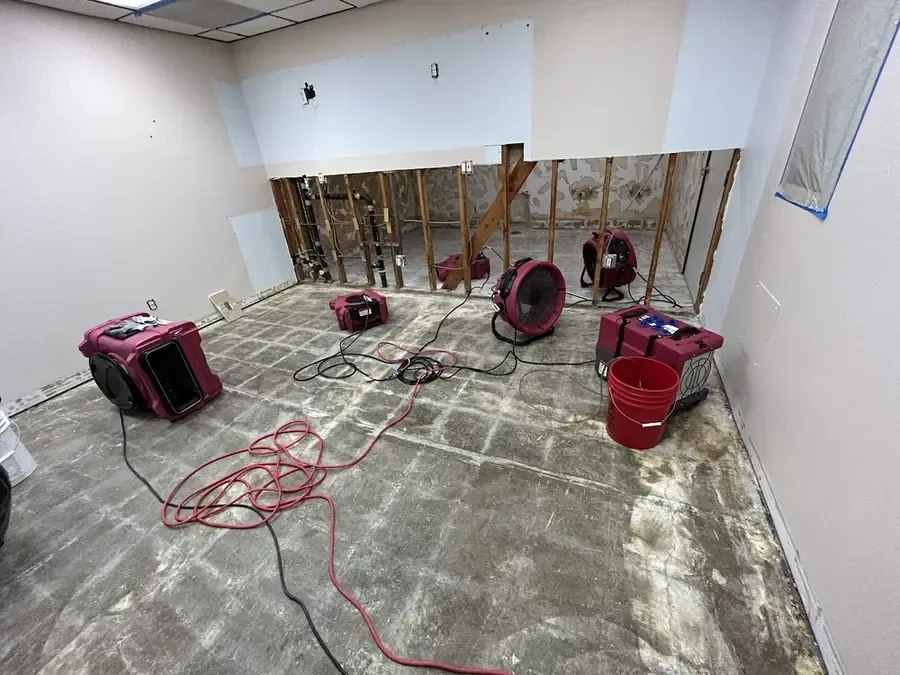
How slab leak water damage is handled
The mitigation team separates pipe access from water-damage removal. Moisture readings define the wet area, while the plumbing diagnosis identifies where the supply needs repair. Both records help explain the next step.
Rapid local response
The response team prioritizes active water and asks about safe entry, continuing flow and occupied rooms. A clear description helps the assessment focus on hazards before equipment reaches the wet area.
IICRC S500 drying standard
The drying crew sets material goals against unaffected references, sizes dehumidification to the evaporation load and adjusts airflow as readings change. A dry surface alone never closes the moisture record.
Claim-ready documentation
The mitigation team records the source, affected materials, photographs and daily readings in a room-by-room scope. The insurer reviews that evidence against the policy and makes the coverage decision.
Local water experts
The technician distinguishes plumbing discharge from outside water at the actual building. Different floor assemblies, access restrictions and contents call for different drying methods, even when neighboring rooms share the same leak.
First steps for slab leak water damage
- Limit the supply safely
The owner uses an accessible shutoff only from a dry position. A plumber handles the damaged pipe, an uncertain valve or continued flow after isolation.
- Keep the floor clear
Movable contents leave the wet area when safe. Heavy cabinets and attached finishes remain in place until the assessor checks support, moisture and access.
- Record the first signs
The owner notes damp spots, unusual meter movement and the time the problem appeared. Safe photographs preserve the original pattern before extraction changes it.
- Avoid sealing wet layers
New flooring, paint and sealers wait until the technician and installer establish suitable material conditions. A dry-looking surface alone cannot approve the assembly.
What does slab leak water damage cost in Monument, CO?
Slab leak water-damage mitigation commonly ranges from $1,500 to $6,000, with extensive flooring access or several wet rooms costing more. Plumbing detection, pipe repair and finish replacement may form separate parts of the project.
Accessible floor edge
$1,500 to $3,000
- Limited wet finish removal
- Extraction near the affected edge
- Moisture monitoring
Room and wall bases
$3,000 to $6,000
- Broader flooring access
- Cavity moisture checks
- Controlled dehumidification
Multiple concealed areas
$6,000 to $10,000+
- Several affected assemblies
- Longer material monitoring
- Separate repair coordination
Category, wet square footage, material class and the delay before drying change the scope. The Monument water damage cost calculator gives an estimate only; the inspection establishes the work.
Documentation for your insurance claim
The restoration team assembles timestamped photographs, a moisture map, daily psychrometric logs and a room-by-room scope. Sudden accidental water damage, long-term leakage and outside flooding can receive different treatment. The property owner checks the policy with the insurer; documentation supports review without promising payment for mitigation, access or plumbing repair.
The slab leak water damage process
Confirm the plumbing finding
The plumber identifies the supply failure while the restoration technician records the wet boundary. The two assessments distinguish source repair from moisture that remains in the building after the valve closes.
Map the floor assembly
The assessor checks concrete, wall bottoms, cabinets and transitions. Dry comparison locations provide a reference, and the proposed openings follow the measured water path rather than a fixed demolition pattern.
Extract and expose trapped water
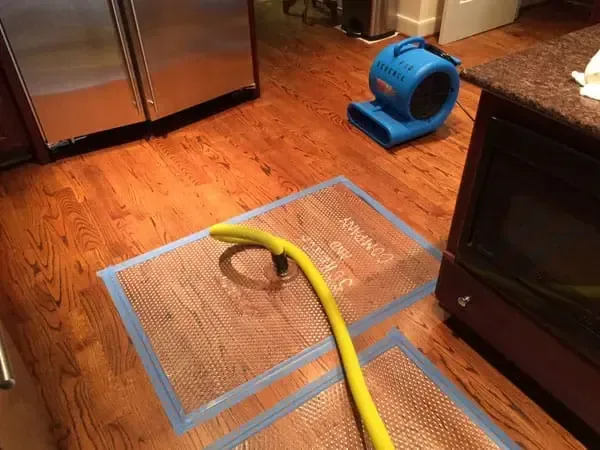
The crew removes accessible liquid and opens only the materials required by condition, contamination and access. Dehumidification and directed airflow then address the moisture remaining in the exposed assembly.
Track readiness for repairs
The drying team records progress at repeatable locations. The final report distinguishes completed mitigation from any concrete testing, plumbing work or flooring installation criteria that the next trade still needs to address.
Inside the slab leak water damage assessment
A damp patch above concrete does not reveal the full extent of a hidden supply failure. Water can move beneath a finish, follow a joint or reach the base of an adjacent wall before the surface feels wet. The technician measures beyond the visible mark and records where the readings return to normal.
Distinguishing a slab leak from another floor-water source
Properties around Second Street can present several explanations for wet flooring, including appliance discharge or water entering at an exterior opening. The plumber checks the supply system rather than treating a warm spot as a diagnosis. The restoration assessor traces the moisture independently so the drying scope does not depend on one symptom.
- A moving meter with all water use stopped gives the plumber a reason to investigate continued consumption.
- A warm patch can support a hot-water leak investigation, but heating systems and sunlight can also affect floor temperature.
- Damp baseboards identify wall edges that need moisture checks while the plumber locates the failed pipe.
- A moisture map records dry comparison areas as well as the highest readings.
The owner keeps plumbing findings, photographs and the mitigation scope together. A pipe repair stops the source but does not remove water already beneath a finish.
Opening only what the wet assembly requires
At a building off Old Denver Road, the inspection first identifies the actual floor construction. A concrete slab, a timber subfloor and a layered finish respond differently to water. The crew checks adhesion, swelling and access before choosing selective lifting or in-place drying. An underfloor leak does not automatically justify removing every finish in the room.
- Loose or swollen finish layers may obstruct drying or require removal because they have lost their shape.
- Wall-base readings help identify cavities that need inspection even where paint still looks intact.
- The technician checks cabinet toe kicks and transitions where trapped water can remain hidden.
- Photographs document the condition before a material is lifted or an access opening is made.
The scope separates pipe excavation and repair from extraction, drying and later floor reinstatement. That distinction makes the proposed work easier to understand and review.
A wet floor edge can hide a larger moisture path. The restoration team checks the assembly before deciding what needs opening and drying.
(888) 532-8620Review the damp floor and wall edgesConcrete drying and the return of the floor finish
Homes near Higby Road require the same material-based finish decision as any other property. The drying crew manages room humidity and airflow while checking the slab and adjoining walls. Concrete needs its own moisture testing before adhesive, underlayment or a replacement finish covers the surface. The flooring installer applies the product's testing requirements before installation.
- Repeated readings show whether the wet boundary is shrinking or a concealed source remains active.
- Dense concrete may release absorbed moisture more slowly than exposed drywall.
- Drying equipment placement changes when an enclosed area receives too little air exchange.
The final record notes the tested locations, remaining repair needs and any flooring-specific testing still required. Closing a wall or replacing a finish too early can conceal moisture that has not reached its drying goal.
Safe access comes first
The response team assesses electrical contact, unstable ceilings and contaminated water before extraction begins. Occupants keep clear of affected rooms until the hazards have been checked. A plumber isolates an active supply failure; drying follows source control and inspection of the materials beneath the visible damage.
Property owners can review flood safety precautions and EPA indoor air information alongside the onsite assessment.
Slab leak water damage in Monument
The restoration team serves ZIP 80132, including properties around Second Street, Old Denver Road and Higby Road. The assessment follows the actual water source and wet materials at each building. Nearby service includes Palmer Lake, Castle Rock, Castle Pines, Parker and Lone Tree.
The response team checks access, occupied rooms and the location of the shutoff before planning equipment placement.
Related water damage services in Monument


Slab Leak Water Damage questions in Monument, CO
Discuss the wet materials
A wet floor edge can hide a larger moisture path. The restoration team checks the assembly before deciding what needs opening and drying.
(888) 532-8620Review the damp floor and wall edgesDoes a warm floor always mean a slab leak?
No. The plumber compares the symptom with meter behavior, supply testing and the location of hot-water piping. The restoration team checks the wet materials separately. Source testing locates the pipe fault, and floor measurements establish how far moisture has spread beneath the finish.
Can the slab stay wet after the plumber repairs the pipe?
Yes. Source control stops new water, while concrete, wall bases and finish layers can retain water already released. The drying crew measures those materials and establishes a drying plan. Repairing the pipe does not by itself establish that the floor is ready to cover.
Does every floor covering need removal?
The assessor checks condition, contamination and drying access. Some sound materials may remain; swollen boards, failed adhesive or inaccessible wet layers can require lifting. The scope should explain each removal decision and distinguish access for the plumber from removal required to dry the structure.
How does the crew check progress under flooring?
The technician records repeatable test locations and compares affected areas with dry references. Selective access may be necessary where a finish blocks useful measurements. The readings, material condition and source-control findings together show progress; a single surface reading provides only part of the picture.
Will insurance pay for the pipe and the floor?
The insurer applies the policy to the cause, resulting damage and proposed work. Plumbing repair, access and mitigation may receive different treatment. The contractor provides photographs and a scoped record, while the owner asks the insurer which provisions and deductibles apply to the specific loss.
When can replacement flooring go down?
The flooring installer checks the manufacturer requirements for the substrate and moisture requirements after mitigation. Concrete may need testing different from routine restoration meter readings. The drying record helps explain what happened, but it does not replace the installer’s product-specific approval for adhesive, underlayment or the finish.
Water beneath the finish needs a measured scope
The mitigation crew follows the moisture through concrete, floor layers and neighboring wall bases after source control.
(888) 532-8620Discuss the underfloor drying assessment