Structural Drying in Monument, CO
Structural drying in Monument addresses moisture held inside walls, floors and framing after extraction. The drying team controls the work-zone conditions and compares repeated readings with unaffected materials before equipment removal.
(888) 532-8620Discuss materials that remain wet after extraction
How structural drying is handled
A room can look dry while its structure holds absorbed water. The operator combines material measurements, humidity control and airflow so each retained assembly has a documented path toward an appropriate drying goal.
Rapid local response
The response team prioritizes active water and asks about safe entry, continuing flow and occupied rooms. A clear description helps the assessment focus on hazards before equipment reaches the wet area.
IICRC S500 drying standard
The drying crew sets material goals against unaffected references, sizes dehumidification to the evaporation load and adjusts airflow as readings change. A dry surface alone never closes the moisture record.
Claim-ready documentation
The mitigation team records the source, affected materials, photographs and daily readings in a room-by-room scope. The insurer reviews that evidence against the policy and makes the coverage decision.
Local water experts
The technician distinguishes plumbing discharge from outside water at the actual building. Different floor assemblies, access restrictions and contents call for different drying methods, even when neighboring rooms share the same leak.
First steps for structural drying
- Keep equipment operating as planned
Occupants avoid moving or unplugging drying equipment without discussing the change. Interrupted airflow or dehumidification can alter the recorded drying conditions and slow material response.
- Preserve the drying zone
Doors and windows follow the operator's plan for the actual conditions. Unplanned ventilation can introduce moisture or disrupt the controlled space around wet materials.
- Report new water promptly
A renewed drip or expanding wet mark changes the assessment. The owner describes the location so the team can check source control rather than simply extending equipment time.
- Delay concealed finish work
Wall closure and flooring installation wait for suitable material conditions and any required trade checks. The final set of readings documents the condition of each tested assembly before finishes return.
What does structural drying cost in Monument, CO?
Structural drying commonly ranges from $1,000 to $5,000 after initial water removal. Dense materials, several drying zones and difficult access increase equipment and monitoring needs. Removal, source repair and reconstruction may sit outside that drying scope.
Small accessible drying zone
$1,000 to $2,000
- Material baseline readings
- Focused airflow and humidity control
- Progress verification
Several wet assemblies
$2,000 to $5,000
- Multiple equipment positions
- Daily psychrometric records
- Cavity and floor monitoring
Dense or enclosed materials
$5,000 to $9,000+
- Specialized drying access
- Longer equipment operation
- Additional substrate checks
Category, wet square footage, material class and the delay before drying change the scope. The Monument water damage cost calculator gives an estimate only; the inspection establishes the work.
Documentation for your insurance claim
The restoration team assembles timestamped photographs, a moisture map, daily psychrometric logs and a room-by-room scope. Sudden accidental water damage, long-term leakage and outside flooding can receive different treatment. The property owner checks the policy with the insurer; documentation supports review without promising payment for mitigation, access or plumbing repair.
The structural drying process
Establish the baseline
The technician maps wet and unaffected material locations and records initial temperature and humidity. The assessment identifies materials that can remain and any access required before a useful drying goal can be set.
Match equipment to the assembly
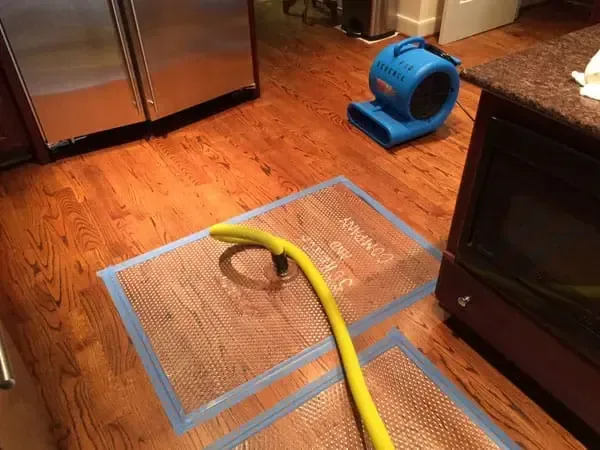
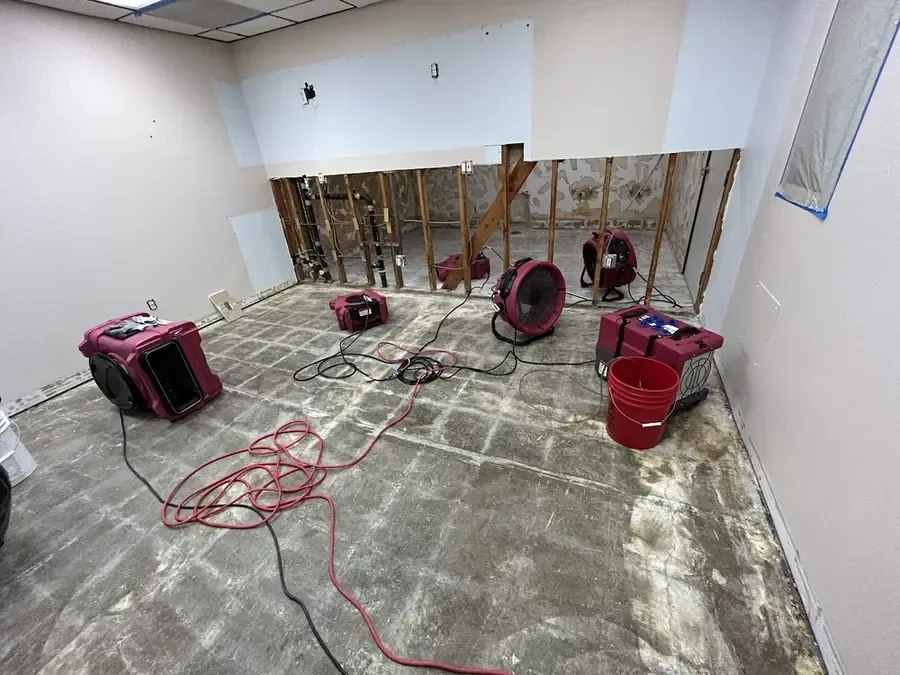
The operator balances airflow, dehumidification and the accessible wet surface. Placement reflects room layout and material class instead of using the same equipment arrangement for every loss.
Read, compare and adjust
Daily observations compare the same material locations with their references. The crew changes equipment or access when progress stalls and checks for another source when the moisture boundary expands.
Close with a usable record
The final documentation states the tested condition and remaining work. It distinguishes structural drying from flooring product tests, finish installation and other repair approvals that the next trade must address.
Inside the structural drying assessment
Structural drying manages the moisture that extraction cannot remove as liquid. The technician identifies the wet materials, determines which can remain and selects a drying arrangement suited to the assembly. A fan count or calendar estimate cannot replace that initial assessment.
Setting material-specific drying goals
In a property near Higby Road, drywall, timber and concrete may all share one water loss but respond at different rates. The assessor records unaffected comparison areas and repeatable wet test points. The drying goal accounts for the material and instrument rather than applying the same number to every surface.
- Moisture mapping establishes the boundary before equipment placement changes conditions.
- Dry references help distinguish the normal material state from water-loss effects.
- Surface temperature images support investigation but do not replace direct moisture checks.
- The technician records access limits where a concealed layer cannot yet be measured.
Clear goals make daily visits useful: each reading answers whether the material is moving toward an established condition, not merely whether the room feels less damp.
Balancing evaporation and humidity control
Cold winters on the Palmer Divide can change the temperature conditions surrounding a dry-out. The operator measures the actual work zone and selects dehumidification and airflow accordingly. Outside weather does not by itself predict indoor drying performance, especially where a cavity remains enclosed.
- Air movers encourage evaporation at accessible wet surfaces.
- Dehumidifiers remove moisture released into the room so evaporation can continue.
- Temperature and humidity records explain equipment performance and changing conditions.
- Dense or deeply wet materials may require a different drying method and longer monitoring.
The crew adjusts placement when one area stalls while others improve. More machines are not automatically better if the airflow misses the wet surface or the drying space remains uncontrolled.
A dry-looking room can still hold moisture in its structure. The technician compares material readings before deciding that the equipment has finished its work.
(888) 532-8620Review the remaining material moistureDocumenting completion before reconstruction
At buildings around Second Street and Old Denver Road, repair timing should follow the retained materials rather than the appearance of new paint or a dry floor surface. The technician rechecks the mapped locations, investigates persistent readings and records the condition before equipment leaves.
- A stable trend supports the conclusion that the assembly is responding to the drying plan.
- A wet boundary that expands prompts a renewed source investigation.
- Flooring installation may require product-specific substrate tests beyond routine mitigation readings.
The closing record identifies completed drying, remaining repairs and any separate trade testing. That distinction keeps a moisture report useful without treating it as a blanket approval for every finish, adhesive or building component.
Safe access comes first
The response team assesses electrical contact, unstable ceilings and contaminated water before extraction begins. Occupants keep clear of affected rooms until the hazards have been checked. A plumber isolates an active supply failure; drying follows source control and inspection of the materials beneath the visible damage.
Property owners can review flood safety precautions and EPA indoor air information alongside the onsite assessment.
Structural drying in Monument
The restoration team serves ZIP 80132, including properties around Second Street, Old Denver Road and Higby Road. The assessment follows the actual water source and wet materials at each building. Nearby service includes Palmer Lake, Castle Rock, Castle Pines, Parker and Lone Tree.
The response team checks access, occupied rooms and the location of the shutoff before planning equipment placement.
Related water damage services in Monument

Structural Drying questions in Monument, CO
Discuss the wet materials
A dry-looking room can still hold moisture in its structure. The technician compares material readings before deciding that the equipment has finished its work.
(888) 532-8620Review the remaining material moistureWhy is room humidity not enough to confirm drying?
Room humidity describes air conditions, while framing, concrete and subfloor may still hold water. The operator records both air and material measurements. Their relationship helps explain progress, but a normal room reading alone cannot approve a concealed wet assembly.
What does IICRC S500 mean for the work?
The standard provides a framework for water-damage assessment and drying. The technician uses source, category, material condition and measurements to plan mitigation. Mentioning the standard describes the drying approach and does not claim a credential or determine a particular completion date.
Can equipment leave when the surface feels dry?
Surface feel does not measure moisture beneath a finish or inside a framing member. The technician checks the established material goals and repeat readings before removing equipment. A dry touch can occur while a deeper layer still needs controlled drying.
Why do readings stop improving?
Restricted airflow, trapped layers, unsuitable conditions or continued water entry can slow progress. The crew investigates those possibilities and adjusts the plan. Simply leaving the same equipment longer may not resolve a concealed access or source problem.
Do concrete and wood use the same target?
No single number applies to every material and instrument. The assessor uses appropriate references and measurement methods. Concrete flooring readiness may need tests specified by the installer or product manufacturer in addition to ordinary restoration monitoring.
What should the final drying record contain?
Useful records identify material locations, comparison references, readings over time, equipment conditions and any remaining limitations. The owner can use that information when reviewing repair timing and an insurance claim, while the insurer separately determines coverage under the policy.
Let measured progress set the drying finish
The drying team records airflow conditions, humidity and the response of retained materials throughout the dry-out.
(888) 532-8620Arrange a structural moisture review