Structural Drying in Castle Pines
A room can feel comfortable while its wall base remains wet. Structural drying in Castle Pines uses material readings to locate retained moisture, position equipment and assess progress before finishes conceal the assembly again.
(888) 532-8620Discuss the material drying plan
How structural drying is handled
Drying is a sequence of material decisions supported by measurements. The setup accounts for exposed surfaces, concealed layers and the surrounding air so retained assemblies can be evaluated beyond the simple appearance of a dry room.
Rapid local response
The response team prioritizes active water and asks about safe entry, continuing flow and occupied rooms. A clear description helps the assessment focus on hazards before equipment reaches the wet area.
IICRC S500 drying standard
The drying crew sets material goals against unaffected references, sizes dehumidification to the evaporation load and adjusts airflow as readings change. A dry surface alone never closes the moisture record.
Claim-ready documentation
The mitigation team records the source, affected materials, photographs and daily readings in a room-by-room scope. The insurer reviews that evidence against the policy and makes the coverage decision.
Local water experts
The technician distinguishes plumbing discharge from outside water at the actual building. Different floor assemblies, access restrictions and contents call for different drying methods, even when neighboring rooms share the same leak.
First steps for structural drying
- Keep source status visible
Report renewed leaks or unexplained moisture changes during drying. A stable setup depends on knowing whether the release stopped or additional water is still entering.
- Maintain the equipment layout
Moving equipment for comfort can change airflow at wet surfaces. Discuss concerns so adjustments preserve the drying function and leave essential household routes accessible.
- Leave measurement positions accessible
Avoid blocking monitored areas with furniture or boxes. Consistent access allows repeat readings at the same material positions instead of introducing a new comparison point.
- Coordinate repairs with the record
Reconstruction should allow assessment before closure. Drying notes identify ready materials, areas needing more attention and removed components that remain part of the replacement scope.
What does structural drying cost in Castle Pines, CO?
Structural drying costs in Castle Pines depend on material density, accessible evaporation surfaces and the extent of retained moisture. The estimate should describe the drying zone, equipment purpose and monitoring work so the scope can be reviewed meaningfully.
Small accessible drying zone
$1,000 to $2,000
- Limited retained materials
- Open evaporation surfaces
- Focused progress readings
Several wet assemblies
$2,000 to $5,000
- Connected material zones
- Broader airflow planning
- Multiple measurement positions
Dense or enclosed materials
$5,000 to $9,000+
- Restricted moisture release
- Additional access assessment
- Complex equipment arrangement
Category, wet square footage, material class and the delay before drying change the scope. The water damage cost calculator gives an estimate only; the inspection establishes the work.
Documentation for your insurance claim
The restoration team assembles timestamped photographs, a moisture map, daily psychrometric logs and a room-by-room scope. Sudden accidental water damage, long-term leakage and outside flooding can receive different treatment. The property owner checks the policy with the insurer; documentation supports review without promising payment for mitigation, access or plumbing repair.
The structural drying process
Establish the material record
Readings are linked to clear positions in affected assemblies. Source status and cleaning needs help select equipment, while noted access barriers provide context for interpreting subsequent moisture changes within the retained structure.
Arrange evaporation and humidity control
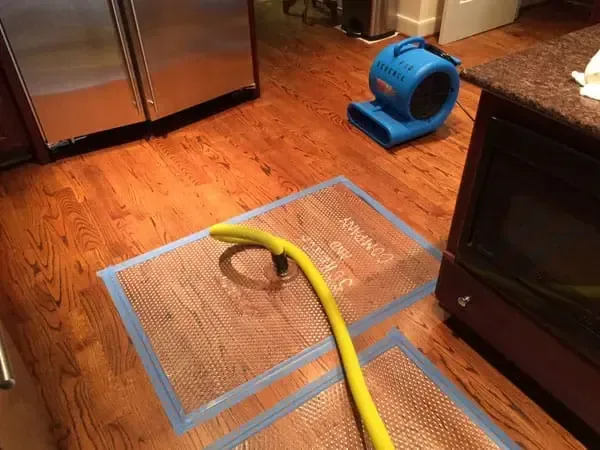
Airflow is directed toward useful exposed surfaces while dehumidification manages released moisture. The layout accounts for room boundaries and safe circulation, with an explanation of how each part of the setup serves the retained wet materials.
Compare progress and adjust the approach
Repeat readings reveal which areas are responding and which remain damp. A stalled location prompts investigation of hidden layers, restricted access or renewed water entry, allowing the drying method to change for a specific material reason.
Provide the reconstruction handoff
Final observations identify retained materials and remaining damage. The record supports decisions about closure and finish installation while separating moisture recovery from plumbing, roof or reconstruction tasks that require their own completion and coordination.
Inside the structural drying assessment
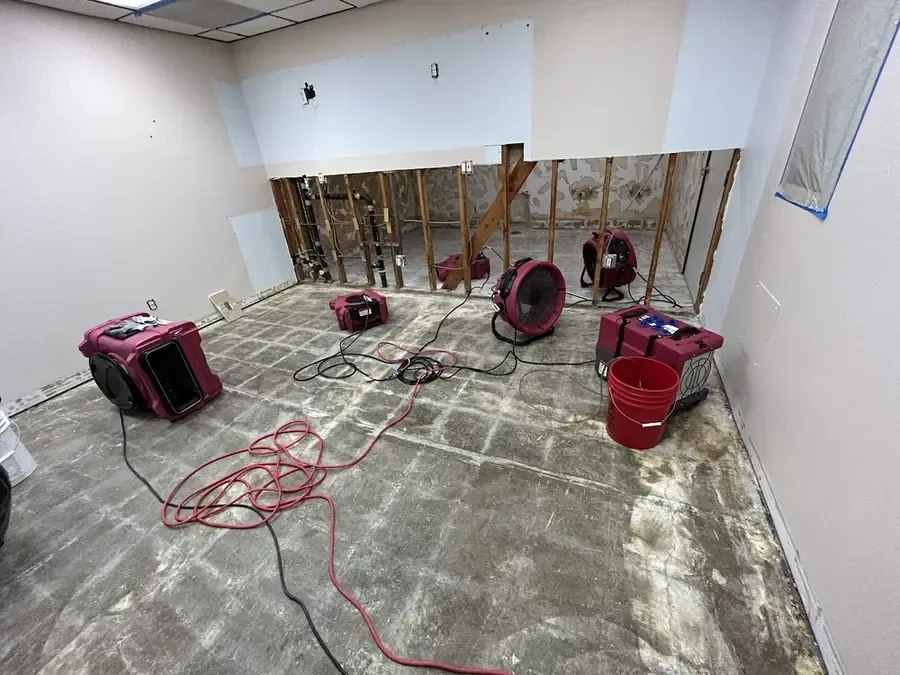
The disappearance of standing water changes the job from collection to moisture management. Structural drying in Castle Pines examines what remains in framing, flooring and finishes after extraction. Each retained material needs a practical evaporation path and a way to measure progress, especially where a dry surface covers a damp layer underneath.
Start with a map that can be revisited
Readings should be tied to identifiable positions instead of remembered as isolated values. A wall base near a doorway, an exposed framing member and a floor transition offer useful reference locations. Dry comparison material can also help interpret the affected assembly's condition.
- Different materials may require different measurement methods and interpretations.
- Concealed dampness needs an access decision when readings or physical changes suggest deeper involvement.
- The source should be controlled before a stable drying trend can be expected.
- Water condition and necessary cleaning affect which materials can remain in the drying area.
Give equipment a specific material target
A property near Retreat Park might have wet framing exposed for repair, while a home in Hidden Pointe may still have intact floor layers under assessment. Equipment placement follows those conditions. Air movement supports evaporation at accessible surfaces, and dehumidification manages moisture released into the work area's air.
If progress slows, the assessment should consider obstructed surfaces, concealed layers or continuing water entry. Adding equipment without understanding the barrier may leave the wet interface unchanged. The owner should know which readings are being followed and what change would trigger a different approach.
Describe the wet finishes, removed materials and source repair status. Those details help connect the room layout to an assessment of retained moisture within the building assembly.
(888) 532-8620Discuss retained moisture and accessConnect the drying endpoint to reconstruction
Basement finishing and remodeling require City of Castle Pines permits with plan approval. Those repair categories can matter when restoration leads to rebuilding. At a property near Elk Ridge Park, the drying record can help the next trade understand which materials remained and which were removed before the new work begins.
- Replacement finishes should follow suitable moisture conditions for the intended assembly.
- Unresolved access or source concerns belong in the handoff, alongside completed drying tasks.
- Physical damage may still require repair even after a retained material has dried.
The town cleanup overview connects drying with source-specific services. A final moisture record should make the transition clear: extraction handled accessible liquid, drying addressed retained moisture, and reconstruction restores the damaged finish or assembly.
Safe access comes first
The response team assesses electrical contact, unstable ceilings and contaminated water before extraction begins. Occupants keep clear of affected rooms until the hazards have been checked. A plumber isolates an active supply failure; drying follows source control and inspection of the materials beneath the visible damage.
Property owners can review flood safety precautions and EPA indoor air information alongside the onsite assessment.
Structural drying in Castle Pines
Drying assessments near Coyote Ridge Park, Daniel's Gate Park and Hidden Pointe should identify the wet assembly as well as the room. Open wall sections, occupied areas and access restrictions help shape equipment placement and the monitoring route through the property.
The same service nearby: structural drying in Monument, Lone Tree, Parker.
Related water damage services in Castle Pines

Structural Drying questions in Castle Pines, CO
Discuss the wet materials
Describe the wet finishes, removed materials and source repair status. Those details help connect the room layout to an assessment of retained moisture within the building assembly.
(888) 532-8620Discuss retained moisture and accessWhy measure materials when the air feels dry?
Room air and building materials can have different moisture conditions. A comfortable room may still contain damp framing or floor layers. Material readings help assess those assemblies directly instead of using the indoor air or surface appearance as the only indicator.
Can equipment stay in the same place throughout?
Some arrangements remain useful while others need adjustment as exposed surfaces dry. Progress measurements help determine whether a change is warranted. Equipment should be moved for a defined purpose tied to the wet assembly rather than simply to fill the room.
What can cause drying progress to stall?
Restricted evaporation, concealed wet layers or continued water entry can slow improvement. The affected location needs investigation before a new approach is selected. A comparison of repeated readings helps identify whether the problem is localized or affects the broader work area.
Does dry material always mean undamaged material?
Moisture condition and physical condition are separate questions. A finish can dry while remaining swollen, separated or weakened. The handoff should therefore identify repairs still needed, even where retained material readings support the end of the drying stage.
Can occupants temporarily switch equipment off?
Changes should be discussed with the restoration provider because they can affect the drying environment and progress record. Access or comfort concerns can often be addressed through a planned adjustment that keeps the material targets and safe room circulation in view.
When should reconstruction begin?
Reconstruction follows suitable material conditions, completed source correction and applicable repair requirements. The moisture record helps identify readiness for closure, while the rebuilding professional addresses the intended assembly and any permit or inspection needs associated with that work.
Know why the equipment is there
A measured plan explains the target materials, progress checks and remaining repair work so the next construction decision follows the condition of the assembly.
(888) 532-8620Arrange a drying scope assessment