Structural Drying in Palmer Lake
The room can look clear while a wall base or substrate still holds moisture. Palmer Lake structural drying targets retained building materials, using repeat readings to adjust access, airflow and moisture removal as conditions change.
(888) 532-8620Review the retained material moisture
How structural drying is handled
Structural drying manages moisture remaining in sound building materials after removal and necessary cleaning. The plan connects material type, exposed surface area and equipment placement with repeated observations of the assembly's drying response.
Rapid local response
The response team prioritizes active water and asks about safe entry, continuing flow and occupied rooms. A clear description helps the assessment focus on hazards before equipment reaches the wet area.
IICRC S500 drying standard
The drying crew sets material goals against unaffected references, sizes dehumidification to the evaporation load and adjusts airflow as readings change. A dry surface alone never closes the moisture record.
Claim-ready documentation
The mitigation team records the source, affected materials, photographs and daily readings in a room-by-room scope. The insurer reviews that evidence against the policy and makes the coverage decision.
Local water experts
The technician distinguishes plumbing discharge from outside water at the actual building. Different floor assemblies, access restrictions and contents call for different drying methods, even when neighboring rooms share the same leak.
First steps for structural drying
- Confirm the source is addressed
Drying needs a clear account of source repair and possible renewed wetting. Keep repair findings available so unexpected material readings can be compared with the source condition.
- Preserve access to wet assemblies
Avoid replacing trim, flooring or insulation before the retained materials have been evaluated. Open surfaces and reachable test locations allow equipment and monitoring to address the actual moisture remaining.
- Identify normal room constraints
Describe essential passageways, sensitive contents and work areas that affect equipment placement. Those needs can be considered while establishing a drying zone with practical access for repeated material checks.
- Keep equipment changes coordinated
Equipment positions and operation should follow the drying plan. Any necessary change for building access should be discussed with the responsible personnel so it does not leave a wet assembly outside the arrangement.
What does structural drying cost in Palmer Lake, CO?
Structural drying costs in Palmer Lake depend on retained material type, access and the number of wet assemblies. Monitoring, selective exposure and equipment adjustments should be described in the estimate so the owner understands how progress will be evaluated.
Small accessible drying zone
$1,000 to $2,000
- Exposed wet surfaces
- Focused material checks
- Limited equipment layout
Several wet assemblies
$2,000 to $5,000
- Mixed material monitoring
- Connected room arrangement
- Selective access changes
Dense or enclosed materials
$5,000 to $9,000+
- Concealed moisture evaluation
- More complex exposure
- Extended equipment coordination
Category, wet square footage, material class and the delay before drying change the scope. The water damage cost calculator gives an estimate only; the inspection establishes the work.
Documentation for your insurance claim
The restoration team assembles timestamped photographs, a moisture map, daily psychrometric logs and a room-by-room scope. Sudden accidental water damage, long-term leakage and outside flooding can receive different treatment. The property owner checks the policy with the insurer; documentation supports review without promising payment for mitigation, access or plumbing repair.
The structural drying process
Establish meaningful measurement locations
The initial record identifies wet materials, suitable comparisons and accessible test locations. This baseline connects the equipment plan to the assembly itself and gives later readings a consistent context for judging change.
Arrange airflow around the assembly
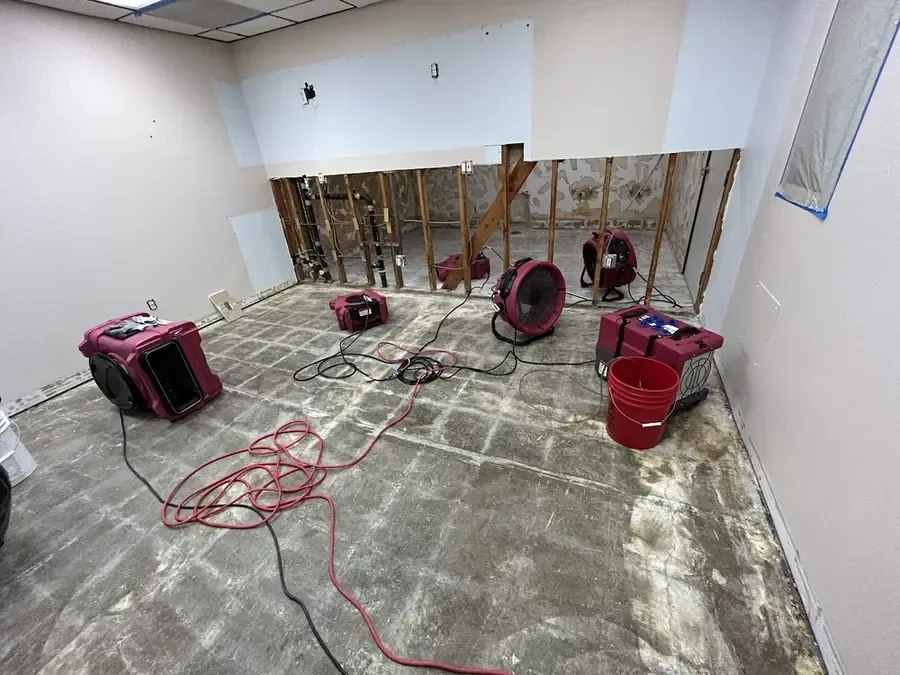
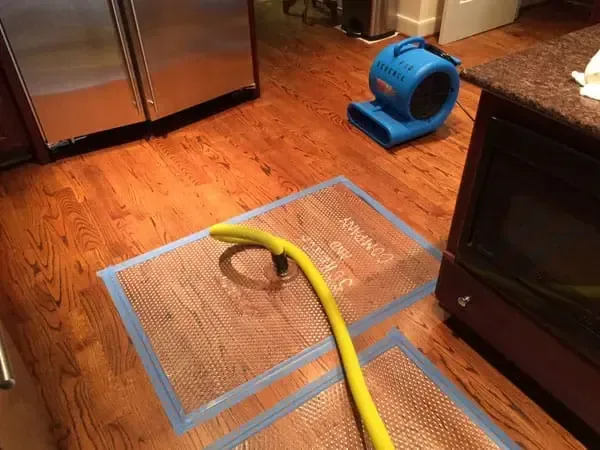
Equipment placement accounts for exposed surfaces, room access and moisture removal needs. Where finishes block a drying path, the scope explains selective opening so the arrangement can actually reach the material still holding water.
Respond to the observed trend
Repeated observations show which areas are progressing and which need attention. Equipment or access changes should address those findings directly, while unexpected renewed moisture prompts an assessment of the source and adjacent concealed spaces.
Provide a material based handoff
The closing record relates final observations to the drying goals and identifies remaining repairs. The owner and reconstruction contractor can then see which materials stayed, which layers were removed and where finish preparation is still required.
Inside the structural drying assessment
Structural drying begins with a question about the assembly: where is moisture still held, and can it leave through the surfaces available? In Palmer Lake, the answer should come from the affected floor, framing or wall material. A dry feeling room is useful for comfort, but material observations determine the restoration work still required.
Set the target around the retained assembly
The town lies on the Palmer Divide, which separates Arkansas River drainage from Platte River drainage. Inside a building, the relevant drying conditions are measured at the wet materials and in the working space. The plan identifies suitable comparison areas and documents the method used to evaluate progress.
- Wallboard edges and framing require checks that reflect their different construction and moisture response.
- A dense substrate beneath flooring may need access beyond the visible wet surface.
- Dry comparison materials help establish context when they are appropriate to the affected assembly.
Give moisture a practical route out
The Palmer Lake Branch Library and Tri-Lakes Center for the Arts provide familiar location references. At an affected property, the room layout determines how equipment can reach exposed surfaces without blocking essential access. Furniture, sealed cavities and intact finish layers may limit airflow even when equipment is operating nearby.
Selective exposure can be more useful than adding another device to an enclosed room. The scope should explain why a trim section or other layer needs opening and how that access improves the drying path. Each change should answer an observed condition in the material record.
- Air movement should reach the wet assembly rather than circulate only through the room center.
- Moisture removal equipment needs a working arrangement appropriate to the controlled drying space.
- Equipment changes should remain coordinated with access for source repair and later reconstruction.
Describe the wet materials, existing openings and any drying equipment already operating. A material focused assessment can explain the remaining moisture and the access needed to address it.
(888) 532-8620Discuss the drying progress recordUse progress checks to make decisions
A material that responds slowly may need additional exposure, a revised equipment arrangement or investigation of renewed wetting. The record should show both the observations and the response. Simply continuing an unchanged setup gives the owner little explanation of what remains.
Completion should connect final readings with the agreed drying goals and the condition of retained materials. The handoff also identifies removed finishes and the preparation needed before replacement. That account gives reconstruction a defined starting point rather than relying on the disappearance of the original puddle.
Safe access comes first
The response team assesses electrical contact, unstable ceilings and contaminated water before extraction begins. Occupants keep clear of affected rooms until the hazards have been checked. A plumber isolates an active supply failure; drying follows source control and inspection of the materials beneath the visible damage.
Property owners can review flood safety precautions and EPA indoor air information alongside the onsite assessment.
Structural drying in Palmer Lake
Palmer Lake occupies the top of the Palmer Divide in El Paso County. The Tri-Lakes Center for the Arts hosts downtown exhibitions and concerts. A drying assessment focuses on the building materials, room access and existing source repair findings.
The same service nearby: structural drying in Monument, Castle Rock, Castle Pines.
Related water damage services in Palmer Lake

Structural Drying questions in Palmer Lake, CO
Discuss the wet materials
Describe the wet materials, existing openings and any drying equipment already operating. A material focused assessment can explain the remaining moisture and the access needed to address it.
(888) 532-8620Discuss the drying progress recordWhy take readings when the room already feels dry?
Room air and building materials can reach different conditions. Moisture may remain within a substrate or cavity after the surface feels comfortable. Material readings help identify that remaining work and keep replacement finishes from enclosing an assembly that still needs drying.
Does more equipment always mean better drying?
Equipment needs a useful relationship with the wet surfaces and the drying space. If a finish blocks access, additional airflow in the room may not address the concealed material. The plan should explain placement, exposure and adjustments based on the observed response.
Can all wet materials share the same drying target?
Different materials and assemblies require suitable evaluation methods and comparison points. A single observation cannot describe every layer of a floor or wall. The record should identify what is being measured and how the result relates to the specific retained material.
Why might equipment move during the work?
Progress checks can reveal that one area has improved while another needs better access or airflow. Moving equipment can focus attention on the remaining wet surfaces. The change should be documented and remain consistent with safe passage and any source repair work.
Should open wall cavities be closed between monitoring visits?
Closing access can block airflow and prevent useful readings at the retained structure. Temporary protection should be coordinated with the drying plan. Permanent closure belongs after the material evaluation supports it and any required cleaning or repair within the cavity is complete.
What does the final drying record provide?
It links the initial affected areas with the material observations, equipment changes and final condition. It should also identify removed layers and remaining finish work. That information supports an understandable repair handoff and gives the owner a practical account of the restoration scope.
Give retained materials a measurable finish point
The plan connects readings and equipment adjustments with the condition required before the opened assembly is repaired or covered.
(888) 532-8620Arrange a material drying assessment