
Monument has relatively rainy summers and cold, snowy winters. When a ceiling stain changes during wet weather, the owner needs an inspection that connects the visible mark to the water path above it. Roof repair, safe overhead access and drying of retained layers should be coordinated before a fresh patch conceals the area.
Key takeaways
- Keep occupants away from bulging or loose overhead material.
- Photograph the changing stain from a safe position.
- Have the source assessed before treating the mark as a finish problem.
- Inspect insulation and framing where the water route reaches them.
- Keep final moisture findings available before the ceiling is closed.
Notice changes without disturbing the ceiling
A homeowner can record whether a stain is new, expanding or appearing again after an earlier repair. Safe photographs taken from the same position help show that change.
Notes about visible dripping and the weather at discovery can also help the contractor organize the inspection.
Bulging, sagging or loose ceiling material needs professional assessment. Occupants should keep clear of the area beneath it and avoid poking or cutting the surface.
Water near a light fitting or other electrical component adds another reason to leave the space until the appropriate professional makes access safe.
The ceiling leak service can assess affected overhead layers and the rooms below. The initial report should identify the exact location using fixed room features.
That gives the technician a reliable reference even if furniture is moved before arrival.
- Photograph from dry, stable footing.
- Describe changes beside a fixed corner or doorway.
- Keep belongings and people out of the drop area.
- Do not puncture a swollen overhead finish.
Follow the water above the visible mark
The point where a stain appears may be where water finally reaches the ceiling finish after traveling through the assembly above. The inspection therefore checks the accessible route through roof space, insulation or framing.
A surface patch alone leaves that route unexplored and can conceal material that still needs attention.
The roofing contractor examines the exterior source, while restoration work follows the interior wetting. Roof leak cleanup can document the affected ceiling and accessible attic materials.
Keeping those findings connected helps the trades coordinate source correction with the work needed beneath it.
Local weather observations should remain specific to the discovery. A note that dripping began during rain is useful to the inspection, as is a report that the stain changed afterward.
The source assessment then identifies the actual defect or pathway requiring repair rather than selecting one from the season alone.
Plan access around the material overhead
Before an opening is made, the technician assesses attachment, saturation and safe support of the affected finish. The work area below should be protected and kept clear.
Controlled access can reveal the hidden layer without treating a worried homeowner's ceiling as a place for exploratory punctures.
Once opened, photographs can show the backing, insulation and framing at the water route. Each layer needs a condition assessment.
Insulation holding moisture can affect access to adjacent material, while the visible finish may show only the last point reached by the water.
A useful access record includes the original surface, the opening and the newly exposed condition. This sequence helps explain why a particular portion was removed.
It also gives the reconstruction contractor a clear view of what remains above the ceiling before a new finish hides it again.
- Protect the room beneath the work area.
- Record material attachment and visible deformation.
- Photograph concealed layers as they become accessible.
- Keep the opening available for necessary follow up inspections.
Check the floor and contents below the drip
An overhead leak can create a second affected area on the floor or furnishings beneath it. The survey should identify where drips landed and whether water spread under nearby objects.
A small ceiling opening can feed repeated wetting into a rug, cabinet top or floor seam.
Contents should be moved only after safe access is established. Photographs of wet items in place help preserve their connection to the leak above.
Dry belongings can then be protected from the work, while damp absorbent items receive their own assessment instead of being placed in clean storage.
The floor examination should continue beyond the most obvious landing point. Water can travel along a surface or beneath a covering after leaving the ceiling.
Recording that lower boundary prevents the project from focusing so closely on the roof that it misses the material affected inside the occupied room.
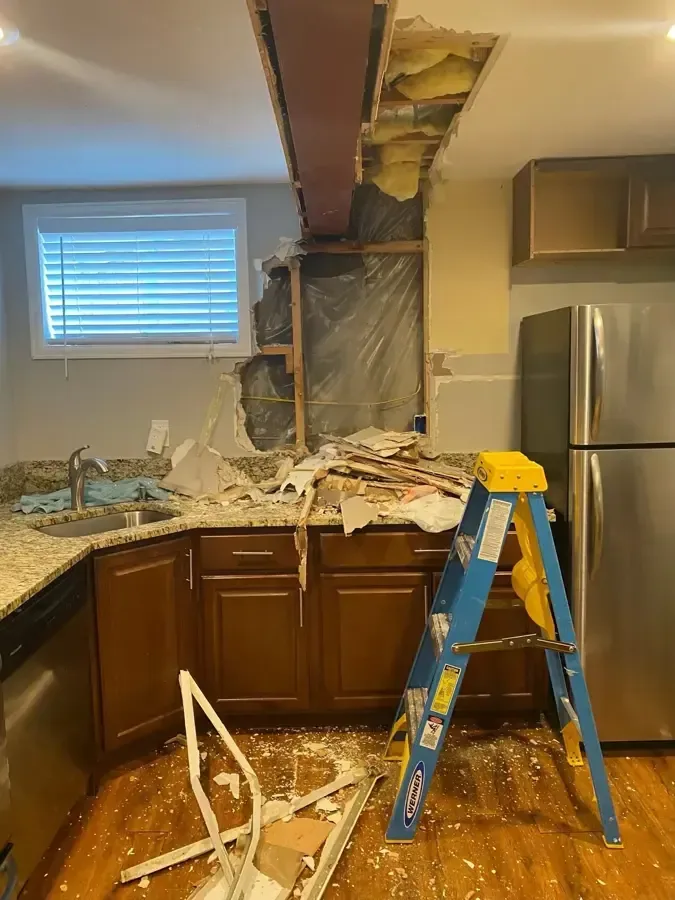
Dry exposed layers with repeatable measurements
After source control and necessary removal, structural drying addresses the retained wet assembly. The technician identifies measurement points on accessible materials and records suitable comparisons.
Framing, ceiling backing and the floor below should be tracked separately where each has been affected.
Air movement needs a useful path to the material being dried, and dehumidification manages the moisture released into indoor air. Equipment should remain clear of unsafe overhead sections and protected access routes.
Placement should reflect what the inspection exposed rather than the original shape of the visible stain.
Monitoring shows whether the retained layers are responding. A persistent wet point may require an assessment of access or further investigation of the source.
The log should explain any adjustment and identify the location it addresses so progress remains understandable across visits.
- Label framing and finish readings separately.
- Track the room below when it also received water.
- Document equipment placement near the access opening.
- Reassess any point that becomes wetter after source repair.
Keep the roof repair linked to interior observations
The source contractor's findings and repair photographs belong beside the indoor record. The file should identify what was corrected and when the work occurred in relation to the observed dripping.
An interior technician can then interpret later moisture changes with that sequence available.
A new stain or fresh drip after repair should be reported promptly with its location. The contractor can compare it with the original route and decide what needs reinspection.
An old discoloration that remains visible after drying should also be documented so appearance and active wetting can be evaluated separately.
For homes on the southern slope of Palmer Divide, the practical task remains the same: connect the actual roof observation to the actual ceiling condition. The building record should describe the inspected assembly.
Broad assumptions about nearby homes do not belong in a room's repair scope.
Approve finish closure with the cavity still visible
Before the opening is closed, the responsible contractors should have the source correction and moisture endpoint available. The retained material condition should be documented while access remains possible.
Photographs taken at this point can be particularly valuable once replacement ceiling material is installed.
The repair scope should identify finish replacement, texture or paint work and any trim affected by access. Those tasks follow mitigation and may have a different schedule.
Clear separation helps the owner understand why a ceiling can be ready for reconstruction while the room still looks unfinished.
A completed handoff should include the original stain photographs, exposed cavity views, drying measurements and remaining work list. Together they explain why the opening was made and what condition was left for repair.
The next contractor can then complete the finish with a clear account of the underlying work.
Questions
Should a swollen ceiling be punctured to release water?
Occupants should remain clear of unstable overhead material and leave controlled access to professionals. The area needs assessment for falling material and electrical exposure before disturbance.
Why might the source be away from the stain?
Water can travel along concealed surfaces before reaching the visible finish. Inspection traces that route above the mark and connects it to the source contractor's findings.
Does the room below need its own inspection?
Drips can wet contents, floor seams and coverings beneath the overhead loss. Those lower materials receive separate observations and drying decisions when affected.
What should be available before the opening is patched?
The repair team should receive source correction records, accessible cavity photographs and final comparisons for retained wet materials. The remaining finish tasks can then be scoped clearly.