
Castle Pines water and sewer service is divided across Interstate 25. The municipal district serving the west and the water and sanitation district serving the east are different contacts. During a sewage backup, identifying the correct provider helps direct the report while the household keeps clear of contaminated rooms and arranges drain assessment and interior cleanup.
Key takeaways
- Match the property to its sewer provider before making the utility report.
- Stop using affected fixtures while the source is assessed.
- Keep occupants and pets away from contaminated floors and contents.
- Coordinate drain correction with removal, cleaning and porous material decisions.
- Keep utility communication and interior cleanup findings in separate records.
Identify the service provider for the property
Castle Pines North Metropolitan District provides water and sewer services west of Interstate 25. Parker Water & Sanitation District serves residents and businesses east of it.
The owner can use property service records to confirm the account and direct the report to the appropriate district.
The report should describe which fixtures backed up, whether the problem continues and what was observed outdoors, if anything. Utility personnel need a clear account of the condition being reported.
A separate plumbing assessment can identify the component or blockage requiring attention at the property.
The sewage cleanup service addresses the contaminated interior after safe access and source conditions are assessed. District communication and room cleanup can be coordinated, with each party's findings retained in the project record.
This gives the homeowner a useful division of responsibilities.
- Locate the property service account or billing record.
- Name the affected fixtures in the report.
- Record whether discharge remains active.
- Keep notes of utility and plumbing responses.
Keep the household outside the affected space
Sewage on a floor creates a contamination concern that deserves a controlled response. People and pets should stay out of the affected room, and wet belongings should remain separate from clean areas.
A dry route to exits should be maintained without crossing the contaminated surface.
Affected fixtures should remain out of use while the cause is assessed. Repeated flushing or draining can add water to an unresolved backup.
The responsible drain professional can evaluate source correction while the restoration crew plans the removal route and protection needed inside the building.
Wet electrical equipment and unstable building materials add hazards that require professional attention. Occupants should avoid trying to salvage belongings from an unsafe area.
Safe observations from the doorway can still identify the first affected fixture and the approximate room boundary for the initial response.
- Restrict access at the room entrance.
- Avoid operating fixtures connected to the affected drainage.
- Leave wet electrical items untouched.
- Keep clean footwear and household storage outside the work area.
Map the contaminated path before cleanup changes it
A backup can spread from the fixture across floor seams, into wall bases and beneath fixed contents. The first survey should document the visible route and deposits while they remain recognizable.
Photographs and a room sketch help explain why later cleaning or material removal extends beyond the original puddle.
Contents should be identified by material and contact with the sewage. An absorbent item resting on the affected floor presents a different handling problem from a dry object on an untouched shelf.
Recording those conditions individually supports more useful decisions than assigning the same treatment to everything in the room.
Removal routes also belong on the plan. Dirty material carried through an unaffected hallway can spread contamination unless handling is controlled.
The crew should arrange protection and staging so the path out of the room does not become an undocumented extension of the work area.
Connect drain correction with the room work
The drain professional's findings should identify the problem addressed and the correction performed. The restoration record should show the contaminated surfaces and work completed inside.
Those records support each other while keeping source correction distinct from cleaning a wall, floor or cabinet that received sewage.
The city requires a permit for water or sewer pipe repair or replacement. When that work is included, the responsible contractor should coordinate the applicable municipal process.
The owner can keep the permit information with the pipe repair documents and retain the interior mitigation record beside it.
A renewed backup during cleanup should be reported immediately so source conditions can be reassessed. The crew then checks whether additional materials received sewage or whether previously cleaned surfaces were affected again.
The work record should identify the new occurrence rather than folding it invisibly into the original cleanup.
- Keep the source diagnosis with the drain invoice.
- Attach permit information to applicable pipe work.
- Record additional discharge after the first inspection.
- Reassess surfaces affected by any renewed backup.
Make porous material decisions before drying
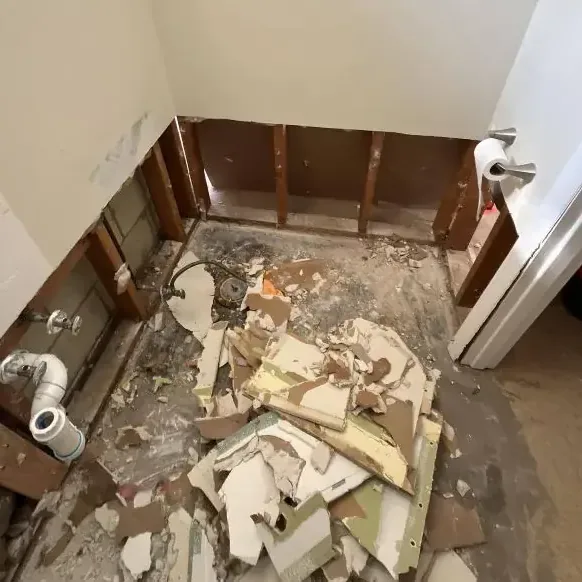
Absorbent wall finishes, insulation and floor coverings can retain contamination as well as moisture. The technician assesses contact, condition and access before deciding what can remain.
Controlled removal may be needed to expose underlying surfaces for cleaning and inspection.
Hard surfaces also require an appropriate cleaning approach after the sewage and debris are removed. The record should identify the cleaned area and any material left exposed.
A surface that looks dry can still need attention as part of the contamination assessment, so appearance alone cannot close that part of the work.
Water removal is one part of this sequence, with handling chosen for the affected water and materials. Cleaning and removal decisions should be completed before ordinary drying arrangements are finalized.
Air movement must be managed so it does not carry debris into unaffected space.
Monitor the retained structure after cleaning
Once the affected area is prepared, structural drying addresses moisture in retained materials. The crew marks repeatable locations on the exposed assembly and records comparison readings.
The wall base, framing and floor support may each require separate monitoring points.
The equipment arrangement should preserve containment, safe access and a useful air path to the wet material. Indoor conditions are recorded with the measurements so changes can be interpreted.
The drying plan should be revised when a concealed pocket or renewed source changes what the crew is treating.
The owner should know which areas remain restricted and what observations need reporting. Fresh odor, visible discharge or a new wet edge should prompt reassessment by the responsible professionals.
Monitoring and source communication work best when each report identifies the exact fixture or material involved.
Leave a clear account of contamination and repairs
The closeout should describe the original contaminated boundary, contents handling, removed materials and cleaned retained surfaces. Final moisture comparisons belong alongside those cleanup notes.
Together they explain both the contamination response and the condition of the structure left for reconstruction.
Photographs should show the opened assembly and any remaining finish work. The next contractor needs to know which surfaces require replacement and which materials stayed after assessment.
A vague statement that the room was dried does not give enough detail to scope those repairs confidently.
Utility communication can remain in its own section with the service provider identified. The household then has a clear record of the report, the drain correction and the interior recovery.
That organization makes later maintenance questions easier to address without confusing public service correspondence with the work performed inside the home.
Questions
Which sewer district serves each side of Interstate 25?
The north metropolitan district serves the west side, while Parker Water & Sanitation District serves the east side. The property service account helps confirm the appropriate reporting contact.
Should affected drains continue to be used?
Fixture use should stop while the backup source is being evaluated. Adding water can worsen the interior release when the drainage problem remains unresolved.
Why remove some absorbent finishes?
Porous layers can retain sewage contamination and hide wet backing. The crew evaluates contact and access, then documents the reason for removal or retention at each affected location.
What is recorded separately from drying?
The contamination boundary, cleaning work, contents handling and source repair each need their own description. Material readings then document the moisture condition of the retained structure.